

On April Fools' Day, SJM Is the One Telling the Truth
A Day When Nothing Is What It Seems
Today is April 1st. The internet is full of fake announcements, joke headlines, and things that look true but aren’t.
Here’s something genuinely true: a fantasy novelist wrote a sentence about clouds that will make you look at the sky differently for the rest of the day. No trick. No punchline.
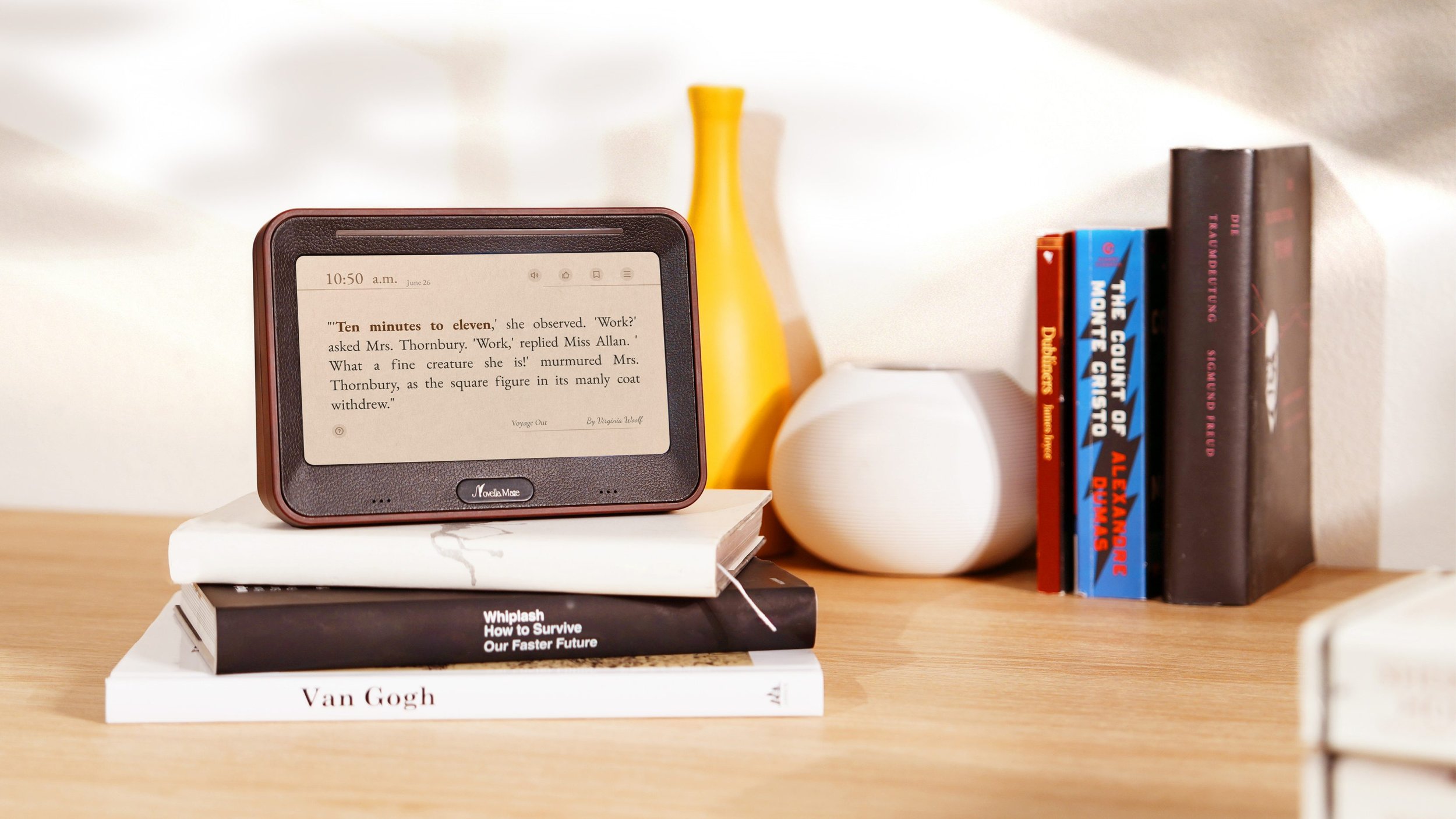
That sentence is sitting on a NovellaMate screen this morning, next to the temperature and the date. And it might be the most honest thing you read today.
What SJM Actually Does With Weather
Sarah J. Maas has sold over 70 million copies of her books across three series. Critics argue about her plots, her pacing, her characters. Almost no one argues about the sky.
The quote on that NovellaMate screen comes from a specific scene in A Court of Wings and Ruin: Feyre’s first arrival at the Dawn Court, where the palace sits so high in the mountain that she sees the clouds before she sees the ground. “There was a reason I beheld the clouds first,” SJM writes. The sky isn’t backdrop. It’s the first fact of a place.
This is what separates SJM’s descriptive writing from ordinary world-building. She doesn’t describe weather to set a scene. She describes it the way you’d describe something you’ve just seen for the first time and can’t stop looking at. The clouds are soft and magnanimous. They have character. They are generous. They do things to light.
Most of us look at a sky like that and think: nice. SJM looks at a sky like that and thinks: what kind of world lives under this?
The Adjectives That Shouldn’t Work (But Do)
“Magnanimous” is a word for people. It means generous, forgiving, large-spirited. Applying it to clouds is technically wrong. SJM does it anyway.
And it works, because the clouds above the Dawn Court are genuinely generous. Their light falls on everything below without preference. Their round edges are gilded not by metaphor but by physics, and SJM knows that physics is often more beautiful than metaphor if you slow down enough to see it.
This is her particular skill: she borrows moral vocabulary and loans it to the natural world. Clouds don’t just look soft. They are soft, in the same way a person can be soft. Weather in her books is never neutral. It is always taking a position.
What If Your Morning Forecast Sounded Like This?
Every morning, millions of people check apps that say: Partly cloudy. High of 20. UV index 6. Accurate, efficient, completely inert. The information arrives and disappears. You close the app and you’re already somewhere else.
Now imagine instead: Enormous clouds drifting in the cobalt sky, soft and magnanimous, still tinged by the rose remnants of sunrise.
You would look up. That’s the thing. You would actually look at the sky you’ve been given today, instead of filing it away as data.
This is the deeper argument behind putting a sentence like this next to your morning temperature. Not that literature is more accurate than a weather report. Obviously it isn’t. But accuracy isn’t always what the morning needs. Sometimes the morning needs a sentence that makes you notice it.
Why Fantasy Writers Understand Weather Better Than Anyone
It sounds counterintuitive. Fantasy is fiction. The weather in SJM’s worlds isn’t real weather. But that’s precisely why it’s described so carefully.
When you’re building a world from scratch, you can’t take the sky for granted. Every cloud has to be earned. Every sunrise has to be justified. SJM ends up paying closer attention to light, temperature, and atmosphere than most of us do in the real world, because in her world those details are choices, not given facts.
The result is a kind of attentiveness we’ve largely trained ourselves out of. We know what a warm April morning feels like. We stopped noticing. SJM never stopped. For her, a cluster of stars can gaze down at someone with intention. A countryside can be “rich with the weight of summer upon it.” Summer has weight. Clouds have magnanimity.
Read enough of her books and it starts to happen to you too.
The Sentence That Changes the Morning
One sentence, properly written, can reframe the next hour.
That’s not a literary theory. It’s something most readers have experienced. You read something in the morning and the day looks different afterward, the way a piece of music can change a room without moving anything in it.
SJM’s cloud sentence does this. You read it and suddenly the sky outside your window is worth a second look. The ordinary April morning becomes the kind of morning a character might arrive somewhere important. The weather becomes weather that means something.
On a day full of things designed to mislead you, that’s worth something.
That’s not a joke.
NovellaMate puts a sentence like this on your desk every morning. On a cloudy April day, it might be exactly this one.
